Our founding application
Turning a six-week harvest into a twelve-month product.
The mango problem is a timing problem. Fruit arrives in overwhelming volume across a short window, prices collapse when supply peaks, and a large proportion of the crop is lost for want of anywhere to put it. Controlled drying converts that glut into a stable product with a twelve-month shelf life.
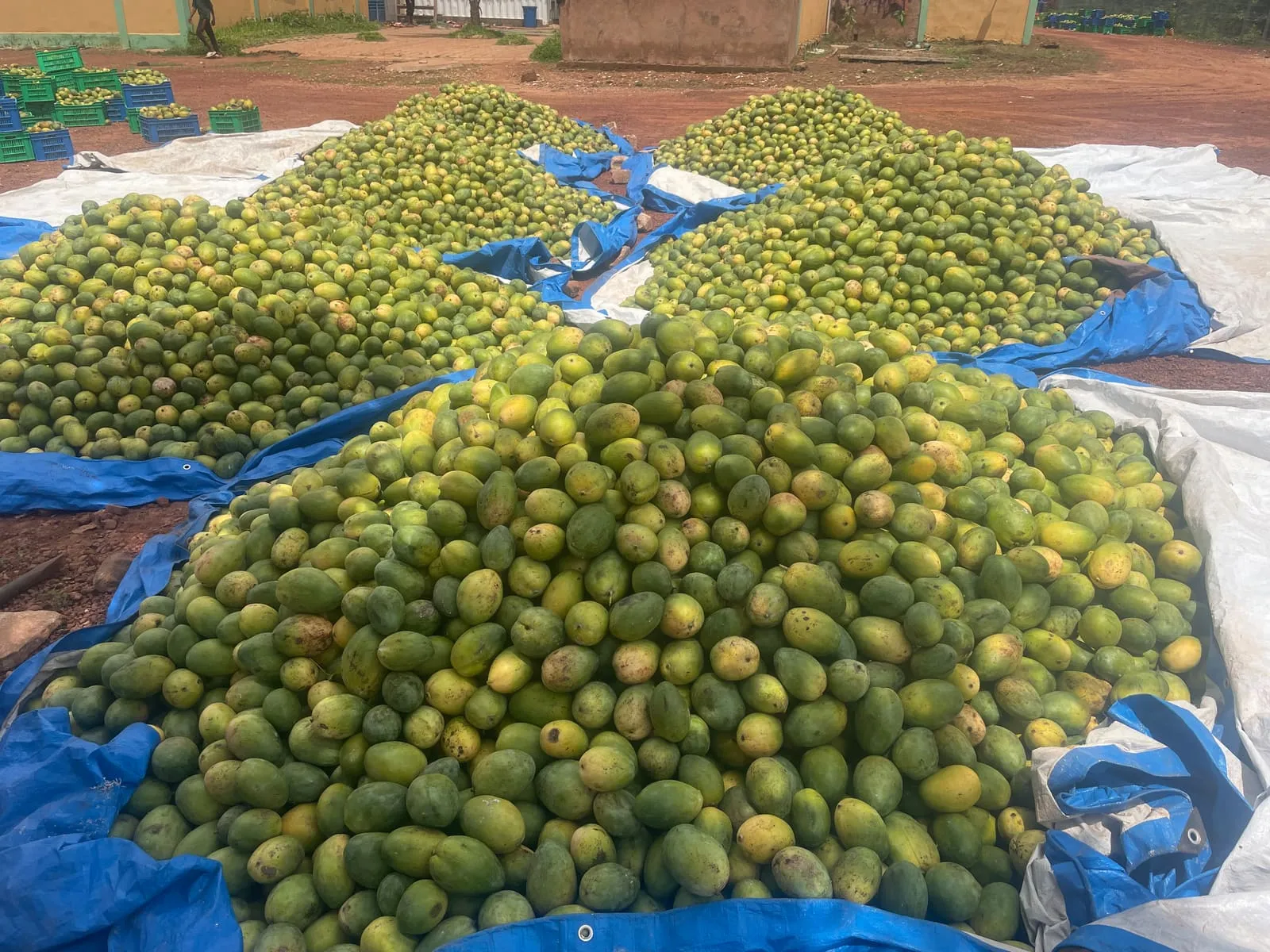 🥭 Fresh intake
Processing parameters
A narrow window, held precisely.
The temperature band is narrower than it looks. Below 65 °C the cycle extends far enough that microbial growth becomes a genuine risk during the slow early phase. Above 70 °C the fruit sugars begin to caramelise, darkening the product and shifting flavour away from fresh mango toward cooked. The band exists for good reasons at both ends.
| Slice thickness | 5–8 mm |
| Initial moisture | ~85% |
| Final moisture | 12–14% |
| Loading density | 35–40 kg/m² |
| Drying temperature | 65–70 °C |
| Air velocity | 2.5–3.0 m/s |
| Relative humidity | 30–40% |
| Cycle time | 16–20 hours |
| Batch capacity | 1,500 kg per chamber |
| Product yield | ~85% |
Pre-processing requirements
- Fruit washing stations with potable water supply.
- Sorting tables for maturity grading — mixing maturity stages in one batch produces mixed results, the most common avoidable quality failure.
- Stainless-steel cutting and slicing stations.
- Quality inspection points, sanitising stations and temporary storage racks.
- Transfer trays and loading carts.
Quality metrics
- Colour retention — the primary visual buying signal for dried mango.
- Texture profile — pliable rather than brittle or leathery.
- Moisture uniformity — consistency across the batch, not just average.
- Microbial safety — validated against international Codex food-safety standards ↗.
- Nutritional retention — vitamin and carotenoid preservation.
Waste-stream recovery. Peel and trim are collected and briquetted as fuel at 4,200 kcal/kg, returning directly to the burner. Seeds are separated for composting or onward use — the waste that would otherwise require disposal becomes a meaningful share of the energy input.
Production economics
1,500 kgdaily capacity per chamber
~450 tannual capacity (300-day year)
16–20 hbatch duration
~85%product yield
Explore further
- Industrial tunnel dryers and panel-room drying — the chambers that hold this profile.
- Batch units for smaller mango volumes and rapid changeover.
- Mango-waste to livestock feed — a second product from peel and trim.
- Worked mango configurations across Burkina Faso, Ghana, Senegal and Mali.
- EU market intelligence: CBI — exporting dried mango to Europe ↗
Request a mango system quote
We’ll size the chambers and burner to your daily fresh-fruit volume and target output.
Request a quote